Understanding normal fabric behaviour and how to keep blinds looking their best.
Outdoor Blinds are designed to handle sun, wind and daily use for many years. Over time, however, you may notice the bottom edge of a blind develops a slight curve or wave rather than remaining perfectly straight.
This is known as Scalloping.
For many homeowners this can be unexpected, especially if the blind looked perfectly flat when first installed. The important thing to understand is that scalloping is a normal behaviour of tensioned mesh fabrics in outdoor conditions. It does not mean the blind has failed, and it does not affect its ability to provide shade, privacy or weather protection.
Understanding why it happens helps you both choose the right fabric and use your blinds in a way that keeps them looking their best for longer.
What Is Scalloping?
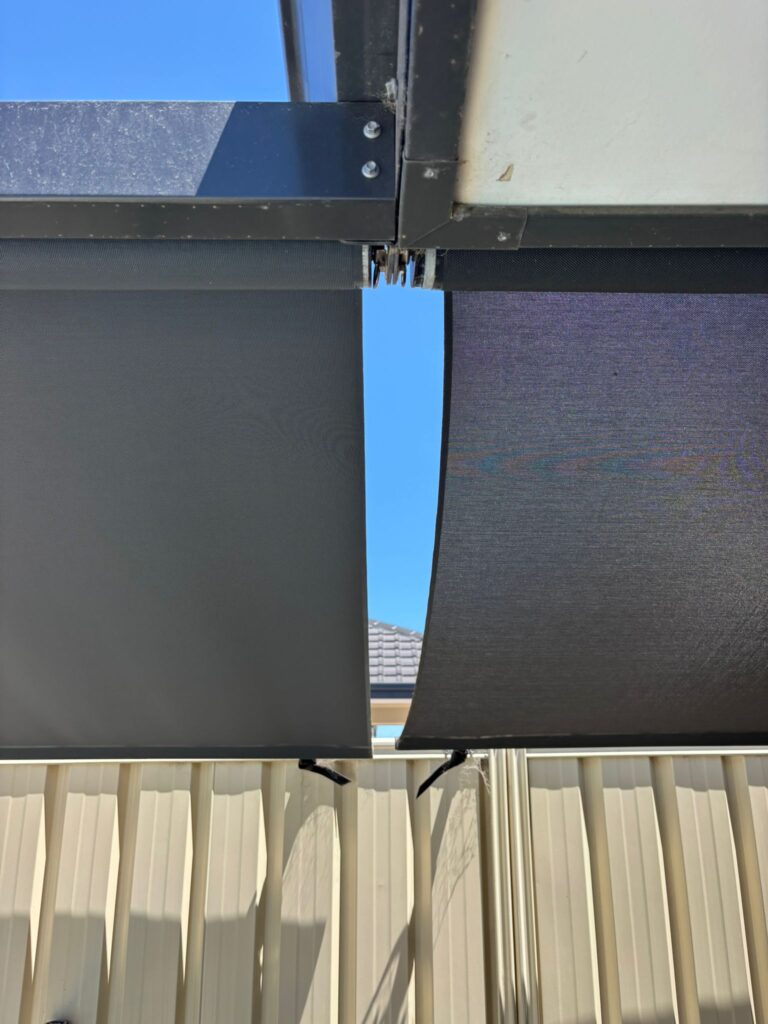
Scalloping is the gentle bowing or curving that appears across the width of an outdoor blind.
Instead of hanging perfectly straight, the centre of the blind may sit slightly higher or lower than the edges, creating a soft arc. The blind still rolls correctly, still blocks sun and wind, and still operates normally.
It is primarily a visual change rather than a functional one.
Why It Happens
Outdoor blinds are tensioned systems. When installed, the fabric is pulled tight so it sits flat and resists wind movement. Over time, three natural forces begin to affect that fabric:
1. Heat Expansion
Mesh fabrics expand and relax with temperature. On hot days the material softens slightly. Repeated heating and cooling cycles gradually change the tension balance across the blind.
2. Constant Downward Tension
If a blind is kept fully tensioned all day, every day, the fabric slowly stretches. The centre section typically receives the most pressure and begins to relax differently from the edges.
3. Over-Tensioning During Use
The most common cause of noticeable scalloping is over-cranking the blind down tightly. This is especially common in summer when users try to stop movement in warm conditions.
The tighter the blind is forced, the more the fabric will permanently adjust over time.
Does Scalloping Mean the Blind Is Faulty?
No.
Scalloping is not a defect and does not indicate a manufacturing issue. It is a natural behaviour of tensioned outdoor mesh materials exposed to sun and weather.
The blind will continue to:
- Provide shade
- Reduce heat
- Maintain privacy
- Operate normally
The change is cosmetic only.
Many customers never notice it once they understand what causes it.
How Fabric Choice Affects Scalloping
Different fabrics respond differently to tension and heat.
Visiontex (Extreme)
This fabric is designed to maintain structure under tension and is the best option when customers want minimal visual movement over time.
If maintaining a straighter appearance is the priority, this is typically the preferred choice.
Visiontex (99% Block)
Lower blockout mesh provides airflow but can show more scalloping due to how tightly it must be tensioned. Higher density weaves block light and hold form.
Vistaweave Mesh
Vistaweave has high block fabric options but may show comparable shaping over time when used under strong tension. Choose a higher grade for less movement over time.
In simple terms:
More airflow fabrics = slightly more visible shaping
Higher block fabrics = less visible change
This doesn’t affect performance, only appearance.
The Biggest Cause: Usage Habits
How the blind is used has a far greater impact than the fabric itself.
Best Practices
Avoid Over-Cranking
Wind the blind down until it is firm, not drum tight. Excessive force is the main contributor to long-term shape change.
Retract During Strong Weather
Blinds are shade systems, not structural wind barriers. Leaving them tensioned during wind or heat waves increases stretching.
Don’t Leave Blinds Up 24/7
Constant tension accelerates fabric relaxation. Retracting the blind when shade isn’t needed dramatically reduces scalloping over time.
Use When Required
Outdoor blinds perform best as an active shade control rather than a permanent wall.
What to Expect Over Time
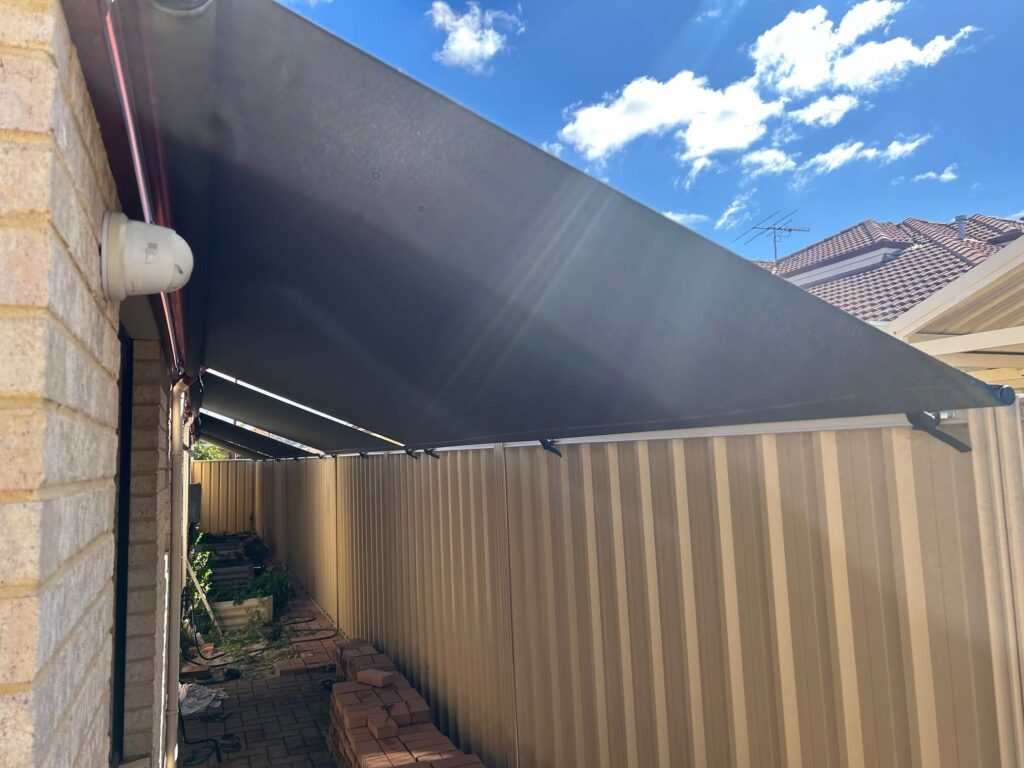
When installed, blinds look perfectly flat.
After seasons of use, a slight curve may appear.
This stabilises and rarely continues increasing once the fabric settles.
Most installations develop only a subtle curve, often only visible from certain angles or lighting conditions.
Choosing the Right Option
If appearance retention is the priority:
Choose a more structurally stable mesh and operate it lightly. Expect minor visual shaping over time and operate carefully.
The more pressure on the fabric the more likely it is do scallop.
The Key Takeaway
Scalloping is simply the result of outdoor conditions acting on a tensioned fabric.
It does not mean the blind is damaged or worn out.
With sensible use:
- Don’t over tension
- Retract in harsh weather
- Only deploy when needed
You can significantly reduce its appearance and keep the blind looking cleaner for longer.
Roof to Fence Blinds are designed to live outside. A small visual change over time is part of that reality, not a failure of the product.
Schedule Your FREE Measure & Quote
All About Shade will never share or sell your details. For more information on this, and how we use your information, please read our Privacy Policy.